
AI Audit Software for Accounting Firms

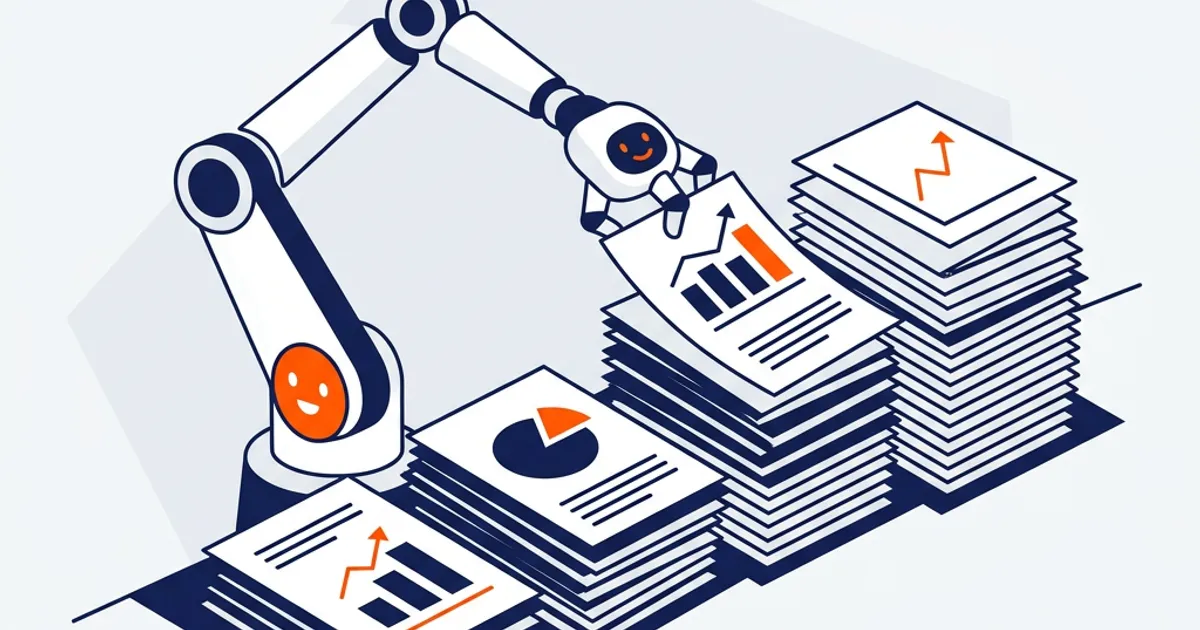
AI audit software is a tool that uses AI agents to carry out audit fieldwork on a firm's real client data — building schedules, tying balances, sampling, and drafting workpapers — inside a documented audit trail. It executes the procedures rather than describing them, flags exceptions by severity, and requires a partner to review and sign off.
What AI audit software means for an audit firm
Audit firms don't have a knowledge problem; they have a capacity problem. Peak season concentrates a huge amount of low-judgment, high-volume work — ticking, tying, recalculating, and assembling workpapers — into a narrow window, and that's where staff burn out and margins compress. AI audit software attacks exactly that layer: it does the mechanical preparation on the actual files so seniors and managers can spend their hours on risk, scope, and conclusions.
The distinction from a chatbot matters here more than anywhere. Audit output isn't an answer — it's an audit trail of evidence supporting an opinion. Software that can't produce that trail can't do audit work, no matter how good its prose. Real AI audit software is agentic and documented: it acts on the data and records how.
The gap in general AI (ChatGPT/Claude)
General-purpose AI fails the audit test on three counts. It can't connect to the client's ledger or supporting schedules, so it has nothing real to test. It doesn't hold your methodology or your materiality thresholds, so it works to no defined standard. And it produces no reproducible record, which is disqualifying when the workpaper itself is the deliverable a reviewer relies on. A chat window is a thinking aid, not an audit tool.
How OCTA Flow delivers AI audit software
OCTA Flow is an AI workspace for accounting and audit firms. Audit procedures run as pre-built Skills inside an Engagement that moves through Collect, Build, Run, Review, and Sign off. You connect QuickBooks, Xero, Sage, or Zoho, gather supporting documents through the client portal, and run the Skill. The agent builds lead schedules, ties balances to the trial balance, performs sampling and recalculations, and drafts the workpaper — logging every action.
- Skills encode your firm's audit procedures so testing runs to your standard.
- Automations apply that standard consistently across every engagement.
- Approvals put a partner in the sign-off seat, with severity-ranked findings surfaced first.
- Connectors pull client data directly, so nothing depends on manual export.
Flow scored 83% across 200+ independent accounting scenarios — 2.5× the nearest AI tool — and stays human-in-the-loop: Quality Gates screen output and no engagement closes with a Critical finding open. See the practitioner view in AI for auditors.
What it does — concrete use cases
- Lead schedule preparation — build and agree each lead to the trial balance.
- Substantive tie-outs — recompute, foot, and cross-foot balances with exceptions flagged.
- Sampling and testing — select and test items to defined criteria, documenting every result.
- Workpaper assembly — produce a consistently indexed, review-ready file for every engagement, built for audit firms.
Trust, control, and security
The audit trail is the product: every figure traces to its evidence, and every action is reproducible. Findings are ranked Critical/High/Medium/Low so material items surface first, a partner signs off before anything is final, and client data is isolated per firm and not used to train models.
Frequently Asked Questions
Does AI audit software replace the auditor? No. It prepares evidence and workpapers; the auditor evaluates them, applies skepticism, and forms the opinion. Sign-off by a person is a required step.
Is the output defensible under peer review? Yes — every step is logged and reproducible, so a reviewer can trace each conclusion to its source, which is exactly what makes AI-prepared work reviewable.
How accurate is it? Flow scored 83% across independent accounting scenarios, ahead of general AI tools, and every workpaper is reviewed before sign-off.
Can it enforce our materiality and methodology? Yes. Thresholds and procedures are set in the Skill, so the agent tests to your firm's standard, not a generic one.
How is client data protected? Data is isolated per firm in a multi-tenant architecture and is never used to train models.
Run audit fieldwork on your own client files — free for 30 days. → Start your trial