
AI Tools for CPA Firms

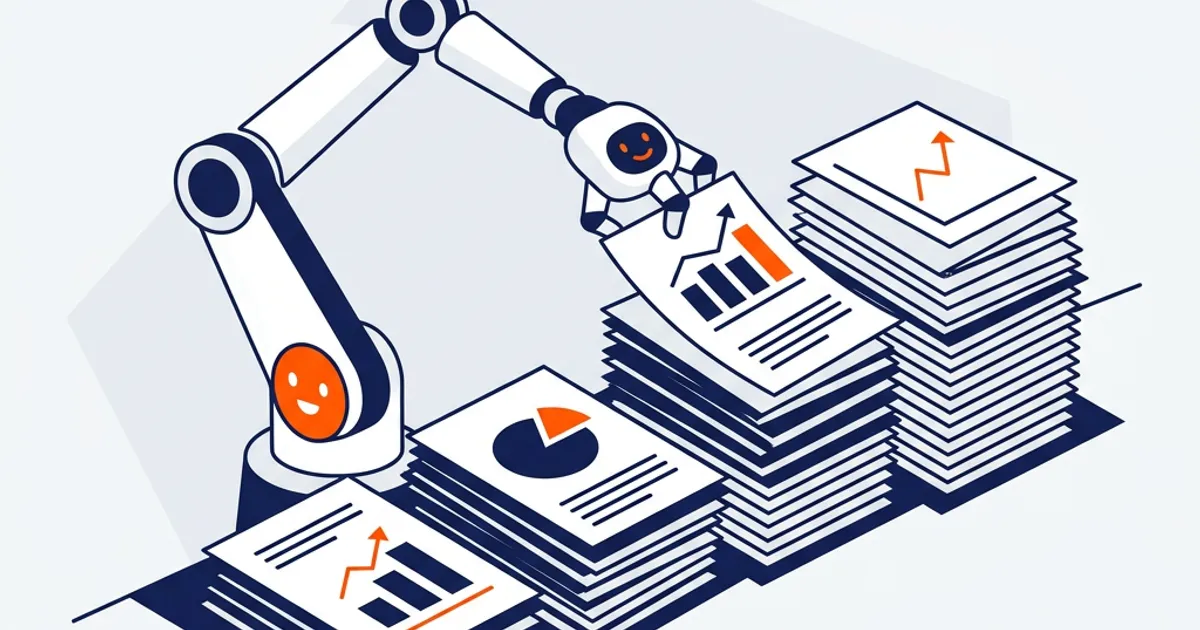
AI tools for CPA firms are software that use AI to draft, analyze, or execute accounting, tax, and advisory work. They range from chatbots and document readers to agentic workspaces that run reconciliations and closes on your real files. For CPAs, the tools that matter most are the ones that execute billable work with a reviewable audit trail.
The categories a CPA firm actually sees
Not all "AI tools" do the same job. It helps to sort them:
- General chatbots (ChatGPT, Claude): great for drafting emails, memos, and research; can't touch your ledger or leave an audit trail.
- Point tools: AI features bolted onto tax prep, document management, or a specific reconciliation step.
- AI workspaces: a single environment where AI agents execute end-to-end engagements on your real files, under partner review.
The first two speed up pieces of the work. The third is what changes a firm's capacity, because it takes the recurring, high-volume execution off your seniors' plates.
What CPAs should look for
Because your name goes on the return and the financials, the bar is higher than "does it save time." Look for:
- Executes on real files, not just chat — connected to QuickBooks, Xero, Sage, or Zoho.
- Carries firm procedures so the work matches your standards every run.
- Full audit trail — every action logged, reviewable, defensible.
- Human-in-the-loop sign-off so a CPA reviews before anything is final.
- Data isolation — your client data stays yours and isn't used to train models.
A tool that can't satisfy those five isn't ready for client-facing work, no matter how impressive the demo.
How OCTA Flow fits
OCTA Flow is an AI workspace built for CPA and bookkeeping firms. You describe a task; AI agents do the work inside an Engagement (Collect → Build → Run → Review → Sign off), using:
- Skills — 100+ pre-built procedures so you start from a known-good method, not a blank prompt.
- Connectors — direct QuickBooks, Xero, Sage, and Zoho links.
- Automations — recurring work across every client at one standard.
- Approvals + audit trail — a partner signs off; every step is logged.
On 200+ independent accounting scenarios, Flow scored 83% accuracy — 2.5× the nearest AI tool — and every output is reviewed before sign-off.
What it runs for a CPA firm
- Bank reconciliation in QuickBooks, end to end.
- Financial statement preparation as review-ready workpapers.
- Month-end and year-end close across a book of clients.
- Trial balance review and adjusting entries drafted for your posting.
Smaller practices tend to feel it first — see OCTA Flow for small CPA firms for how a lean team scales client count without adding headcount.
Trust, control, and security
Flow isolates each firm's data in a multi-tenant architecture and does not use it to train models. Quality Gates check every output, findings surface by severity, and sign-off is blocked while a Critical item is open. The AI does the work; the CPA signs the name. That's the control layer that makes AI usable in a firm that answers to clients, lenders, and regulators.
Frequently Asked Questions
What are the best AI tools for CPA firms? It depends on the job. Chatbots for drafting, point tools for narrow tasks, and an AI workspace like OCTA Flow for executing full engagements with an audit trail.
Can AI do CPA-level work? It can execute the mechanical volume — reconciliations, close steps, statement prep — accurately and fast. Judgment, review, and sign-off stay with the CPA. That division is the point.
Are AI accounting tools safe for client data? Only ones that isolate your data and don't train on it. Flow is built to that standard; consumer chatbots are not.
How accurate is OCTA Flow? 83% on independent accounting scenarios, versus 55% for a general Opus model and 33% for ChatGPT — with review before every sign-off.
Will AI tools replace CPAs? No. They remove repetitive execution so CPAs spend time on review and advisory — the work clients actually pay a premium for.
How do I evaluate an AI tool before I trust it with client work? Run it on a real engagement you already know the answer to, and check the output against the five criteria above — does it execute on your files, carry your procedures, produce a traceable audit trail, require your sign-off, and isolate your data? A tool that passes on a known engagement is one you can extend to the rest of the book.
See the AI workspace CPA firms use to scale — free for 30 days. → Start your trial