
AI for Auditors

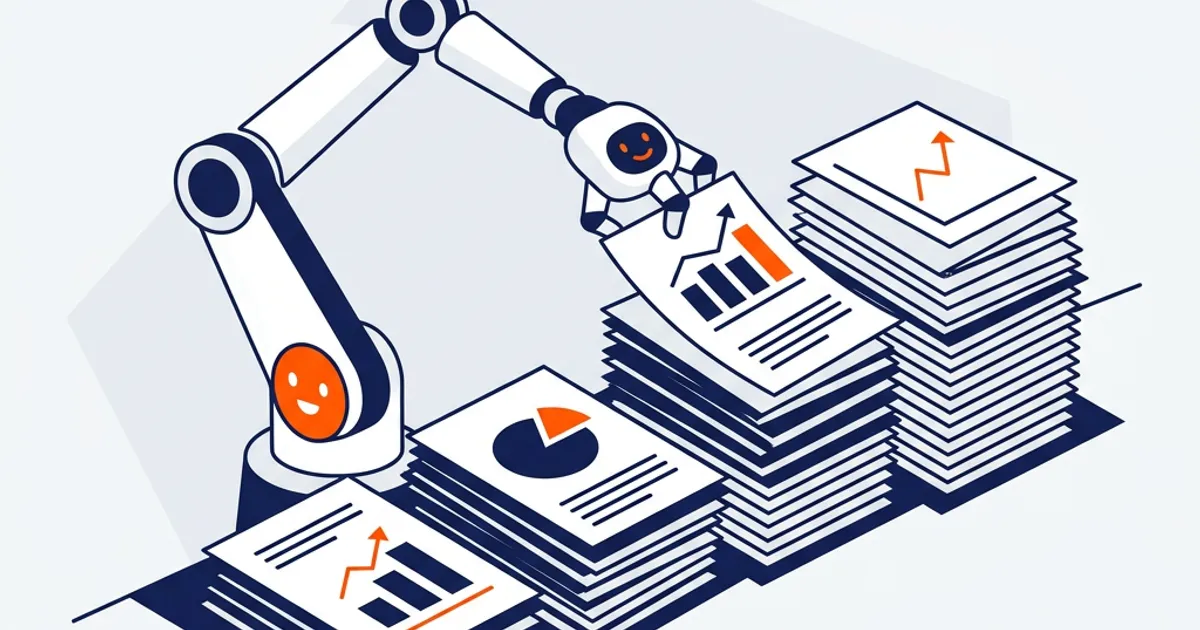
AI for auditors is software that uses AI agents to perform audit fieldwork on real client data — building lead schedules, tying balances to the trial balance, running sampling, and drafting workpapers. Instead of advising on procedures, the agent executes them, flags exceptions by severity, and logs every step, while the auditor reviews the evidence and signs off.
What AI for auditors actually means
Audit work is evidence work, and most of it is mechanical: agreeing the ledger to the lead schedule, foot-and-cross-foot checks, recalculating balances, chasing supporting documents, and assembling workpapers in a consistent index. Real AI for auditors does that assembly on the actual client files and hands the team a documented starting point, rather than a paragraph explaining how it should be done.
For an audit team, that changes where the hours go. Staff time shifts away from ticking and tying toward the parts of the engagement that require professional skepticism — evaluating the exceptions, scoping the risk, and reaching a conclusion. The agent doesn't form the opinion; it prepares the evidence the opinion rests on.
The gap in general AI (ChatGPT/Claude)
For audit, the shortcomings of general AI are especially sharp. ChatGPT and Claude can't pull the client's trial balance or supporting schedules, so they can't test anything real — they can only describe testing. They don't carry your firm's audit methodology, so nothing is done to your standard. And critically, they leave no evidentiary trail: an auditor can't rely on work whose derivation isn't documented and reproducible. In a field where the workpaper is the deliverable, "the AI said so" is not audit evidence.
How OCTA Flow delivers AI for auditors
OCTA Flow is an AI workspace where audit tasks run as pre-built Skills inside an Engagement — Collect, Build, Run, Review, Sign off. You connect the client's QuickBooks, Xero, Sage, or Zoho, request supporting documents through the client portal, and run the relevant Skill. The agent builds the lead schedule, ties balances to the trial balance, performs recalculations and sampling, and drafts the workpaper — logging every action so the work is reproducible.
Findings surface by severity: a material unexplained difference is flagged Critical, a small timing item Low. Quality Gates check output before it reaches the reviewer, and you can't sign off with a Critical finding open. In independent testing across 200+ accounting scenarios, Flow scored 83% accuracy — 2.5× the nearest AI tool — and the model stays human-in-the-loop throughout. Built for audit firms, the same Skill runs at a consistent standard across every engagement and every team member.
What it does — concrete use cases
- Lead schedules — build and tie each lead to the trial balance. Start from the audit lead schedule template.
- Tie-outs and recalculations — agree balances, foot schedules, and recompute figures with exceptions flagged.
- Sampling and testing — select and test items against defined criteria, documenting each result.
- Workpaper assembly — produce a consistently indexed, review-ready workpaper package for every engagement.
Trust, control, and security
Everything the agent does is captured in an audit trail, so each conclusion traces back to its evidence — which is the whole point in an audit context. Findings are ranked by severity so material issues can't hide in a clean-looking file, a partner signs off at the end, and client data is isolated per firm and not used to train models.
Frequently Asked Questions
Can AI perform an audit on its own? No, and it shouldn't. Flow prepares evidence — schedules, tie-outs, tests, workpapers — but the auditor evaluates it, applies professional judgment, and issues the opinion. It's assisted fieldwork, not an automated opinion.
Is the work defensible in a review or peer review? Every step is logged and reproducible, so a reviewer can trace each figure to its source. That evidentiary trail is precisely what makes AI-prepared work reviewable.
How accurate is it on real client data? Flow scored 83% across independent accounting scenarios, well ahead of general AI, and every workpaper is reviewed before sign-off.
Does it work with our audit methodology? Yes. Your firm's procedures are encoded as Skills, so the agent tests to your standard rather than a generic one.
How does it handle client documents? Requests go out through the client portal, and supporting files feed directly into the engagement — no email chains to reconcile later.
Run your next set of audit workpapers on real client data — free for 30 days. → Start your trial