
AI for Accounts Payable

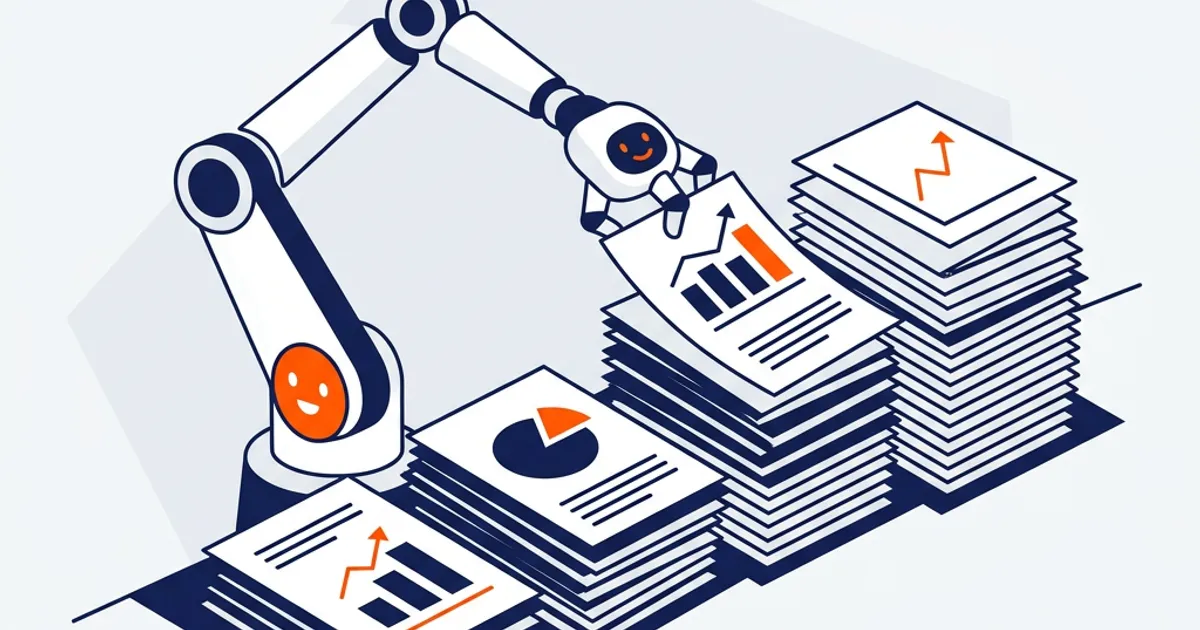
AI for accounts payable uses AI agents to process the payables cycle — capturing bills, coding them, matching to purchase orders and receipts, and flagging exceptions. It handles the high-volume intake and coding work on real documents, surfaces discrepancies for review, and logs every step, while approval and payment stay with your team.
Why AP is a firm bottleneck
For firms running accounts payable for clients, the work is relentless: bills arrive in every format, each has to be captured, coded to the right account, matched against support, and queued for approval — times every client, every week. It's high-volume and mostly mechanical, but the stakes are real: a duplicate bill, a miscoded expense, or a missed discrepancy flows straight into the ledger and the payment run.
That combination — heavy volume, low judgment, but real consequences for errors — is exactly where AI that flags exceptions earns its keep. It's also work where speed and accuracy are both client-facing: a late payment strains a vendor relationship the client will hear about, and a duplicate payment is money that has to be clawed back. Getting AP right quietly protects the firm's standing with every client whose books it touches.
Why a chatbot can't run AP
A general chatbot can explain a three-way match but can't perform your client's AP. It doesn't ingest the bills, doesn't reach the ledger to code them, doesn't hold each client's vendor and coding rules, and leaves no record for approval. AP needs an agent that captures documents, matches them to support, and produces a traceable, approvable queue — none of which a chat window does.
How OCTA Flow handles accounts payable
OCTA Flow runs the payables cycle as an Engagement:
- Skills — capture and code bills, match to POs and receipts, and build the AP queue to your rules.
- Connectors — read and write against QuickBooks, Xero, Sage, or Zoho.
- Automations — recurring AP intake runs across every client on schedule.
- Approvals + audit trail — bills are proposed for approval, never paid automatically; every action is logged.
Flow flags discrepancies — a bill that doesn't match its PO, a possible duplicate, an unusual amount — as findings by severity, so review targets the exceptions. On 200+ independent accounting scenarios it scored 83% accuracy, with review before anything is approved. Pair it with vendor reconciliation automation and AP aging analysis automation, or see the step-by-step AP aging analysis in QuickBooks.
A concrete example
Say a client submits 40 vendor bills for the week. Flow captures all 40, codes them to the client's chart of accounts, and matches each against its purchase order and receipt where they exist. Thirty-six match cleanly and land in the approval queue. Four surface as findings: one bill with no matching PO, one that appears to duplicate a bill paid last week, one where the invoiced quantity exceeds what was received, and one coded to an unusual account for that vendor. The accountant reviews those four, corrects the coding on one, holds the duplicate, and approves the rest. The week's payables are ready for approval in one pass, with the four real exceptions isolated rather than hidden in a stack.
Trust, control, and security
AP touches money, so control is strict. Each firm's data is isolated and is not used to train models. Quality Gates check the coding and matching before review, discrepancies surface as findings, and bills are proposed, not paid — approval and payment stay entirely with your team. Every action is logged for a defensible trail. The AI processes the payables; a human approves them.
Frequently Asked Questions
Can AI pay bills automatically? No — and it shouldn't. Flow captures, codes, and matches bills and builds an approval queue. Approval and payment stay with your team.
How does it catch duplicate or wrong bills? It matches each bill to its support and flags mismatches, possible duplicates, and unusual amounts as findings by severity for your review.
Does it work across multiple clients? Yes. Define the AP procedure once as a Skill and it runs at a consistent standard for every client.
Can it keep AP aging under control? Yes. Because bills are captured and coded as they arrive rather than in a month-end scramble, aging stays current, and Flow's AP aging analysis surfaces what's overdue or approaching terms so nothing slips through to a late payment or a strained vendor relationship.
See your AP queue captured, coded, and ready for approval — free for 30 days. → Start your trial